Close

Menu
Most exhibitors think of November as the end of the show season. In reality, it is the start of the next one. The first quarter of 2027 is unusually crowded at the front and unusually shifted at the back. IDEX and NAVDEX run in Abu Dhabi from 21 to 25 January, WHX Dubai opens at Expo City Dubai from 25 to 28 January, and Gulfood has moved to 15 to 19 March, after Ramadan. Put those dates next to the December holidays and GITEX week, and the number of real working days left to design and build a January stand is much smaller than it looks. That is why the smartest exhibitors brief exhibition stand builders in Dubai in November, not in the new year. Mystique is already planning January and March builds for clients, and this guide shows how to work backwards from your 2027 show dates so nothing gets rushed.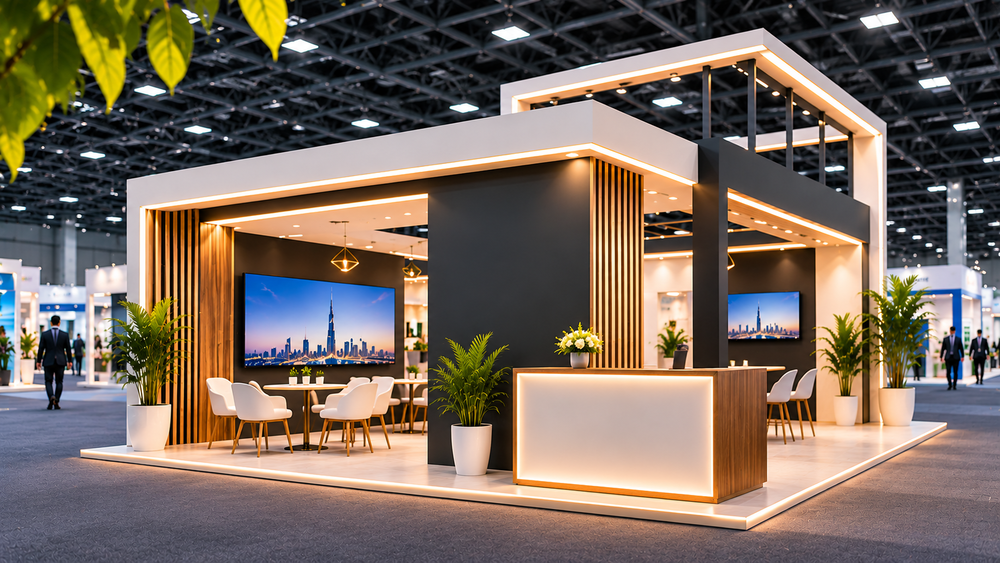
A January stand is not built in January. It is designed in November, approved in early December, and fabricated in the weeks around the holidays. The problem is that December in Dubai is already full. GITEX Global takes over Expo City Dubai in early December, the UAE National Day holiday falls on 2 and 3 December, and many teams take leave over the New Year. Workshops do not stop, but approvals on the client side often do.
If you wait until January to brief your stand, you are asking exhibition stand builders in Dubai to design, approve, and fabricate in about three weeks. That is possible for a simple shell scheme upgrade. It is not realistic for a custom stand, a double decker, or anything with built-in technology.
IDEX closes in Abu Dhabi on 25 January, the same day WHX Dubai opens at Expo City Dubai. For exhibitors, this creates two practical problems.
First, build-up crews, transport trucks, and rental furniture are being booked for both shows at the same time. Second, some suppliers serve both the defence and healthcare sectors, so their capacity gets split. If you are exhibiting at either show, ask your builder early whether they are also building for the other one, and how they will staff both.
Gulfood 2027 will run from 15 to 19 March across Dubai World Trade Centre and the Dubai Exhibition Centre at Expo City Dubai. That later date sounds like extra breathing room, but there is a catch. Ramadan is expected to begin around the second week of February 2027, subject to moon sighting. During Ramadan, working hours across the UAE are shorter, and decision-making often slows down.
In practice, this means your Gulfood stand design should be approved before Ramadan starts. Fabrication can continue during the holy month, but late design changes during shorter working days are where delays and extra costs creep in.
Here is a realistic timeline for a custom stand, worked backwards from each show:
For shell scheme upgrades or modular stands, you can usually shorten each stage by two to three weeks. For double decker stands, add time for structural approval from the venue.
The quality of your stand depends heavily on the quality of your first brief. Before your first meeting, try to have:
Exhibition stand builders in Dubai can only give you an accurate quote and timeline when these basics are clear. Missing details are the most common reason projects stall in December.
Related Blog Post : Exhibition Stand Builders in Dubai vs an In-House Events Team: What Actually Costs Less This Show Season
Often, yes. If your stand was built with modular frames or reusable structural parts, much of it can be refreshed for a new show with new graphics, new lighting, and a different layout. This can cut both cost and lead time. Ask your builder to inspect your stored components in November, so you know what is reusable before you approve a new design.
The exhibitors who look calm and well-prepared in January are the ones who started planning in November. With IDEX and WHX landing in the same week and Gulfood shifting to after Ramadan, 2027 rewards early decisions more than ever. Briefing exhibition stand builders in Dubai now gives you better pricing, more design options, and a team that is not rushing over the holidays. Mystique's design and fabrication teams are already scheduling January and March builds, so now is the right time to start the conversation about your 2027 calendar.
BLOG
With the constantly changing environment of exhibitions and trade shows, your stand is your stage. It's the first impression, the icebreaker, and sometimes the lingering impression attendees have about your brand. As we progress further into 2025, companies face an essential dilemma: invest in Portable Exhibition Stands or opt for Custom Exhibition Stands? Both alternatives have their pros and cons, relying on your business's requirements, objectives, and expenditure. In this blog post, we will thoroughly analyze both solutions to help you make the best decision for your 2025 exhibition plan.

Portable Exhibition Stands are light, modular stands that are easily assembled and disassembled. They are ideally suited for brands that attend numerous exhibitions annually and require flexibility, simple portability, and minimal assembly time.
On the contrary, Custom Exhibition Stands are bespoke, fully custom-made structures designed to embody your brand's image, message, and visual style. They are usually constructed with utmost visual impact in mind and are typically erected by experts at the exhibition site.
One of the most significant benefits of portable exhibition stands is their simplicity in terms of transportation and installation. You don't require a team of personnel or complicated logistics. Numerous portable systems are meant to be set up DIY
In 2025, as most companies seek ways to maximize their marketing investments, portable exhibition stands offer an affordable option. With reduced manufacturing and shipping costs, they are perfect for
SMEs or new businesses.
These stands are designed to be reusable, and most systems offer modular options. That is, you can rearrange the design for various booth sizes or change the messaging without requiring a complete redesign.
If time is of the essence and you need to stand up rapidly, portable stands are your best option. Most suppliers now offer 3D previews and quick production timelines by 2025, thanks to technological advancements.
While some visual customization is possible, most portable exhibition stands have predetermined forms. This restricts innovation and brand individuality.
In highly competitive exhibitions, a basic portable stand may fail to attract attention compared to custom-designed, large-scale structures.
With repeated usage, portable systems can wear out faster than custom-designed counterparts if mishandled.
Custom stands are designed to represent your brand. From bespoke layouts to premium materials, everything is crafted to entice, engage, and impress.
You can add interactive areas, LED walls, product demonstration stations, or themed settings that align with your marketing objectives and storyline.
In 2025, when experiences and storytelling matter most, custom exhibition stands provide the competitive edge of total creative freedom.
High-quality materials and finishes for a professional look and feel.
Custom builds use durable, often premium materials. The finish and build quality usually reflect professionalism and trust.
Custom exhibition stands involve design consultation, production, transportation, and installation, making them significantly more expensive.
Planning and building a custom stand can take weeks or even months. If you're working with tight deadlines, this may be a limitation.
Although pieces can occasionally be reused or repurposed, custom stands are typically designed for a specific show or room and cannot be easily transferred from one to another.
The decision between portable exhibition stands and custom exhibition stands depends on your particular business requirements. The following questions will help you make a choice:
If you're operating on a limited budget, portable exhibition stands are a cost-effective and efficient solution.
If your brand participates in numerous shows per year, the portability and simplicity of installation offered by portable stands make them a worthwhile investment.
If you intend to make a strong impression, introduce a new product, or position yourself as a thought leader, a bespoke exhibition stand will ensure you cut through.
If your team is small or lacks the resources to handle intricate logistics, portable stands are a more suitable option.
Portable stands tend to fare better in terms of reusability and are being made from more environmentally friendly materials in 2025.
Most brands are now combining both alternatives—utilizing a portable framework with some bespoke add-ons, such as LED screens or company panels. This hybrid approach is flexible yet doesn't scrimp on aesthetics.
Whether custom or portable, incorporating digital features such as QR codes, touch screens, or augmented reality elements is a growing trend in 2025.
Eco-conscious exhibition design is in demand. Portable stands are now made from recyclable materials, while custom builds incorporate greener production practices.
Exhibition service providers now offer stand storage, transportation, and maintenance solutions, making both options more manageable in the long term.

Whether to use portable exhibition stands or custom exhibition stands is not a universal choice. It will rely on your brand objectives, budget, event plan, and operational capabilities. Portable stands offer unparalleled convenience and value, making them ideal for regular and small-to-medium-sized events. Custom stands are designed to make a lasting impression, particularly in large-scale trade shows where differentiation is crucial.
In 2025, brands will strike a balance between the pros and cons and even adopt hybrid approaches to achieve the perfect balance. Whatever path you choose, your stance should always have a compelling story behind it—your story—and resonate with your audience on a deeper level.