Close

Menu
Most exhibitors think of November as the end of the show season. In reality, it is the start of the next one. The first quarter of 2027 is unusually crowded at the front and unusually shifted at the back. IDEX and NAVDEX run in Abu Dhabi from 21 to 25 January, WHX Dubai opens at Expo City Dubai from 25 to 28 January, and Gulfood has moved to 15 to 19 March, after Ramadan. Put those dates next to the December holidays and GITEX week, and the number of real working days left to design and build a January stand is much smaller than it looks. That is why the smartest exhibitors brief exhibition stand builders in Dubai in November, not in the new year. Mystique is already planning January and March builds for clients, and this guide shows how to work backwards from your 2027 show dates so nothing gets rushed.
A January stand is not built in January. It is designed in November, approved in early December, and fabricated in the weeks around the holidays. The problem is that December in Dubai is already full. GITEX Global takes over Expo City Dubai in early December, the UAE National Day holiday falls on 2 and 3 December, and many teams take leave over the New Year. Workshops do not stop, but approvals on the client side often do.
If you wait until January to brief your stand, you are asking exhibition stand builders in Dubai to design, approve, and fabricate in about three weeks. That is possible for a simple shell scheme upgrade. It is not realistic for a custom stand, a double decker, or anything with built-in technology.
IDEX closes in Abu Dhabi on 25 January, the same day WHX Dubai opens at Expo City Dubai. For exhibitors, this creates two practical problems.
First, build-up crews, transport trucks, and rental furniture are being booked for both shows at the same time. Second, some suppliers serve both the defence and healthcare sectors, so their capacity gets split. If you are exhibiting at either show, ask your builder early whether they are also building for the other one, and how they will staff both.
Gulfood 2027 will run from 15 to 19 March across Dubai World Trade Centre and the Dubai Exhibition Centre at Expo City Dubai. That later date sounds like extra breathing room, but there is a catch. Ramadan is expected to begin around the second week of February 2027, subject to moon sighting. During Ramadan, working hours across the UAE are shorter, and decision-making often slows down.
In practice, this means your Gulfood stand design should be approved before Ramadan starts. Fabrication can continue during the holy month, but late design changes during shorter working days are where delays and extra costs creep in.
Here is a realistic timeline for a custom stand, worked backwards from each show:
For shell scheme upgrades or modular stands, you can usually shorten each stage by two to three weeks. For double decker stands, add time for structural approval from the venue.
The quality of your stand depends heavily on the quality of your first brief. Before your first meeting, try to have:
Exhibition stand builders in Dubai can only give you an accurate quote and timeline when these basics are clear. Missing details are the most common reason projects stall in December.
Related Blog Post : Exhibition Stand Builders in Dubai vs an In-House Events Team: What Actually Costs Less This Show Season
Often, yes. If your stand was built with modular frames or reusable structural parts, much of it can be refreshed for a new show with new graphics, new lighting, and a different layout. This can cut both cost and lead time. Ask your builder to inspect your stored components in November, so you know what is reusable before you approve a new design.
The exhibitors who look calm and well-prepared in January are the ones who started planning in November. With IDEX and WHX landing in the same week and Gulfood shifting to after Ramadan, 2027 rewards early decisions more than ever. Briefing exhibition stand builders in Dubai now gives you better pricing, more design options, and a team that is not rushing over the holidays. Mystique's design and fabrication teams are already scheduling January and March builds, so now is the right time to start the conversation about your 2027 calendar.
BLOGThe exhibition industry has evolved significantly over the past decade, and so have the solutions available to exhibitors. Among the most important developments has been the rise of high-quality Modular Exhibition Stands — systems that combine the flexibility of reconfigurable components with a level of visual finish and structural quality that was previously only achievable with fully bespoke custom builds. For businesses that exhibit regularly at multiple events, or that need the ability to adapt their stand for different venue sizes and formats, modular systems offer a compelling combination of quality, flexibility, and long-term value. This blog explains the key features that define a good modular exhibition stand system and how to evaluate them.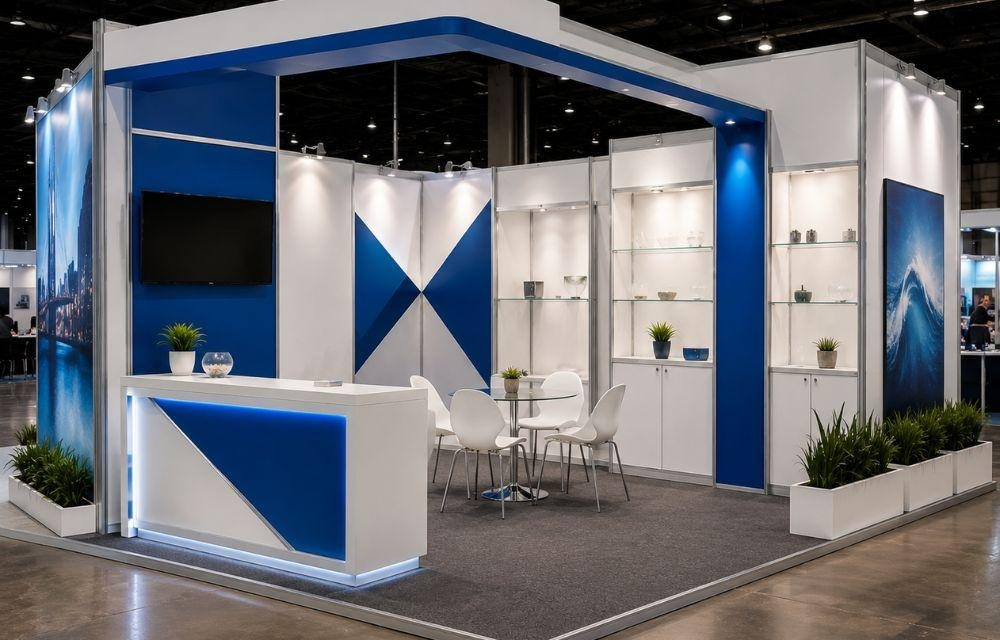
At its core, a modular exhibition stand system consists of standardized, interchangeable structural components that can be assembled in different configurations to create stands of different sizes, layouts, and forms. The key word is interchangeable — in a genuinely modular system, the same structural elements can be used in multiple ways without modification or specialist intervention.
This is fundamentally different from a simply reconfigurable stand, which might be adjustable in size but cannot be meaningfully reconfigured into a different layout or purpose. True Modular Exhibition Stands can be assembled as a backwall display one week, a three-sided island stands the next month, and a tabletop display for a smaller event the following quarter — all using the same core components.
The most important structural feature of any modular system is that it should feel and look as solid and finished as a custom-built stand, despite being a system of standardized components. Low-quality modular systems have visible joints, wobble under pressure, and look clearly assembled rather than purpose-built. High-quality modular systems use precision-engineered connectors, high-quality aluminium extrusions or structural panels, and seamless graphic application methods that conceal the system's modular nature entirely.
When evaluating Modular Exhibition Stands, always assess the visual quality of the connections and joins, the rigidity of the assembled structure, the quality of the surface materials and finishes, and the crispness with which graphics are applied and displayed.
Graphics are the primary communication medium of any exhibition stand, and the way a modular system accommodates graphics has a direct impact on the stand's visual effectiveness. The best modular systems use fabric graphics — tensioned over the structural frame using a silicone edge profile that creates a perfectly flat, seamless, and vibrant display with no visible wrinkles or joins. Fabric graphics also pack flat and lightweight, which significantly reduces transport and storage costs compared to rigid panels.
An alternative is clip-in rigid graphic panels, which can be swapped individually without replacing the entire graphic display — useful for stands where only part of the content changes between events.
One of the most practical advantages of a good modular system is that it can be assembled and disassembled quickly by exhibition staff without specialist tools or construction expertise. This reduces the labour cost of installation and breakdown, which is a significant portion of total exhibition costs at every event.
When evaluating systems, assess the complexity of the connection mechanisms, whether tools are required, how long a typical assembly takes, and how clearly the assembly process is documented. Systems that require specialist installers for every setup negate much of the cost advantage of modular over custom construction.
For businesses that transport their stand to events rather than using an exhibition contractor for every show, the weight, packed size, and packaging design of the modular system are important practical considerations. Good modular systems pack into dedicated carry cases or flat-pack crates that protect the components during transport and storage, fit within standard vehicle load dimensions, and can be managed by a small team without specialist lifting equipment.
“Related Blog - Custom vs Modular Exhibition Stands: Which One’s Right for Your Brand?”
The most valuable feature of a genuinely modular system is the ability to add to it over time. A business might start with a compact backwall display for smaller events and add additional structural bays, flooring, counters, lighting, and meeting room elements to create a larger island stand for major exhibitions — all using compatible components from the same system range.
This scalability means that the initial investment in a quality modular system grows in value over time rather than becoming obsolete as the business's exhibition requirements evolve.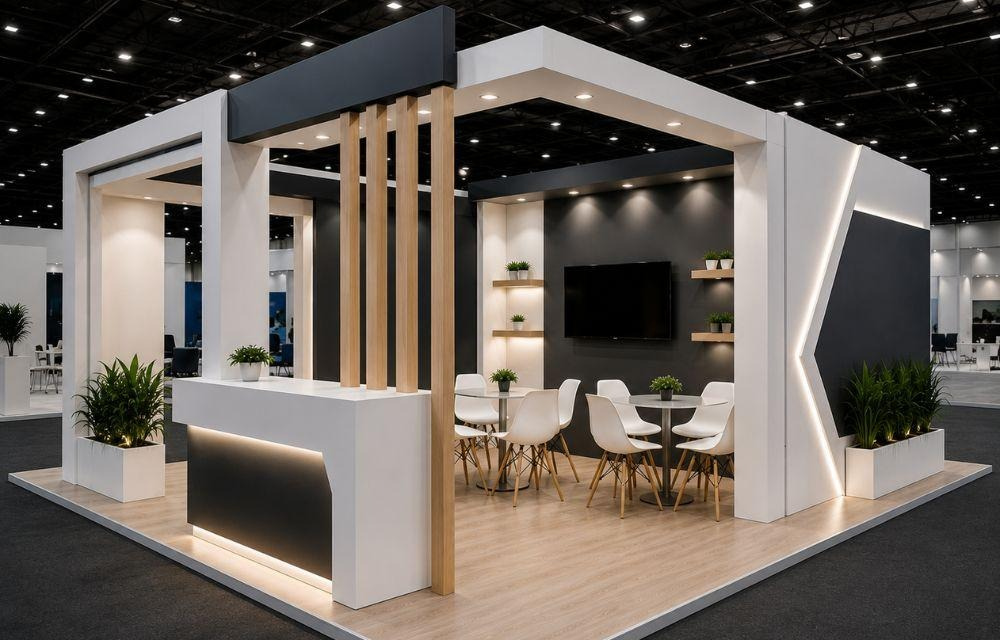
Modular Exhibition Stands represent the practical intersection of flexibility, quality, and long-term value in the exhibition industry. By combining genuinely interchangeable components with high-quality structural engineering and professional graphic display capability, the best modular systems allow businesses to create consistently impressive exhibition presences across a wide range of event formats and sizes. When evaluating options, focus on structural quality, graphic display excellence, ease of assembly, portability, and the scalability of the system for future investment. Working with an experienced exhibition stand specialist who offers genuine, high-quality modular systems is the most reliable way to make this investment pay off across every event you attend.